 GadaFundAm
Why African Creators Should Stop Waiting for Investors to Fund Their Ideas
23 Aug 2026 · gada Fundam
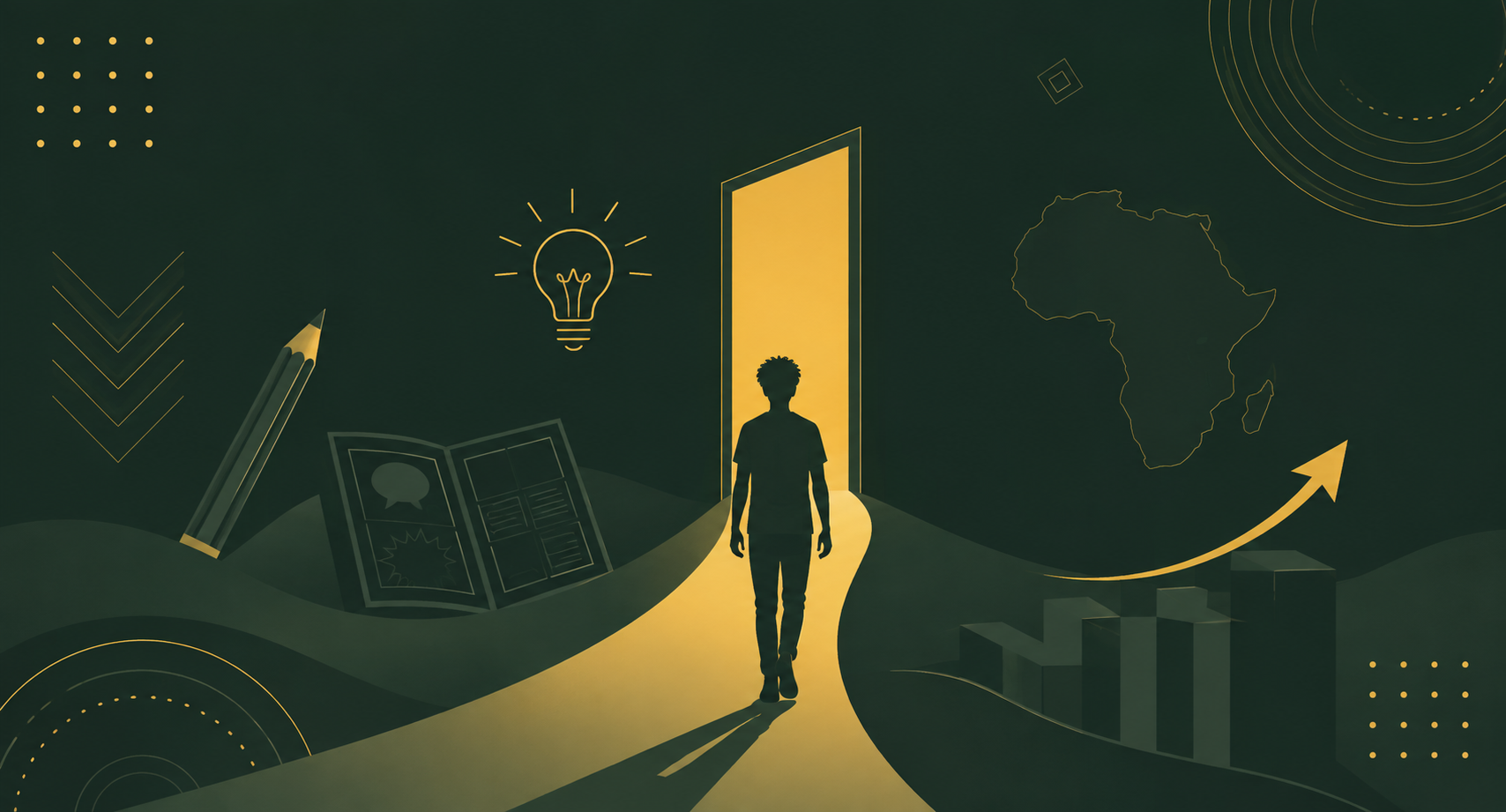
There is a dangerous idea holding back too many African creators:
“Once I get an investor, I can finally build my idea.”
The investor becomes the beginning. The funding becomes the permission. The pitch deck becomes the work.
But the world is changing—and the numbers tell us something important.
African creators cannot afford to build their futures around waiting for someone else to believe first.
This is not an argument against investors. Investors are important. Capital can transform a promising studio, accelerate production, hire talent, expand distribution and turn a small company into a major one.
But investment should be viewed as an accelerator, not as the ignition.
The funding market is not designed to fund every good idea
Africa's venture capital market has grown dramatically, but it remains highly selective.
According to IFC, the number of African tech companies receiving funding each year grew more than sevenfold between 2015 and 2022, reaching more than 700. But by 2024, that number had fallen to fewer than 400. IFC also reported that venture capital deals in Africa fell by around 52% between 2022 and 2024.
The situation improved in 2025. Africa's startups raised billions again, with AVCA reporting 506 venture deals worth $3.9 billion. But capital remained concentrated, and African investors represented only about one-third of active participants in venture deals.
That tells us something creators need to understand:
Capital exists. But capital is selective.
An investor does not have to fund your idea simply because it is creative, culturally important or technically impressive.
They have to believe there is a business around it.
And increasingly, creators need to demonstrate that business before the investment arrives.
Your first investor can be your audience
For creators, this is especially powerful.
A filmmaker can make a short film before securing a production deal.
A game developer can build a playable prototype before raising a major round.
An animator can create a pilot before finding a studio partner.
A comic creator can publish chapters before approaching a publisher.
A musician can release music before signing to a label.
A creator does not necessarily need millions of dollars to prove that an idea deserves to exist.
Sometimes you need a prototype.
Sometimes you need ten customers.
Sometimes you need 1,000 people who genuinely care.
Sometimes you need to make something so compelling that people start asking:
“Where can I support this?”
That is a completely different position from saying:
“I have an idea. Please give me money so I can find out whether people want it.”
The global creative economy is already enormous
This is not a small market waiting for permission to become important.
UN Trade and Development estimates that global exports of creative services reached $1.7 trillion in 2024, more than twice the value of creative-goods exports. Creative services represented 20% of global services exports that year.
UNCTAD's broader Creative Economy Outlook also found that creative industries can account for between 0.5% and 7.3% of GDP and between 0.5% and 12.5% of employment, depending on the country.
And digitalization is making the opportunity even bigger.
In 2024, digitally deliverable services accounted for 56% of global services exports. Yet Africa and Latin America together generated less than 3% of global ICT-services exports.
That gap should not only be interpreted as a disadvantage.
It is also an opportunity.
There is enormous room for African creators to build exportable digital products, stories, games, animation, music, software and media.
But someone has to build them.
Africa has a distribution advantage that previous generations did not have
The creator of today does not need to wait for a television station to approve a show.
They don't necessarily need a publisher to approve a comic.
They don't need a major game publisher before putting a prototype in front of players.
Digital platforms have changed the economics of distribution.
The World Bank has noted how freelancing platforms, marketplaces, e-commerce and social media have transformed areas including music, gaming and content creation by allowing creative professionals to reach audiences directly.
And mobile technology is becoming an increasingly important economic engine across the continent.
GSMA estimates that mobile technologies and services contributed $240 billion to Africa's economy in 2025, equivalent to 7.8% of GDP, while supporting approximately 13 million jobs.
Think about what that means for a creator.
Your potential customer is no longer necessarily sitting in the same city as you.
Your audience can be in Lagos, Nairobi, Accra, Johannesburg, London, Atlanta or São Paulo.
Your product can travel farther than you can.
That is leverage.
Stop asking, “Who will fund this?”
Start asking, “What can I prove?”
This is perhaps the most important mindset shift.
Instead of asking:
Who will give me $100,000 to make my game?
Ask:
What can I build with what I have that proves people want this game?
Instead of:
Who will finance my animation series?
Ask:
Can I create a three-minute pilot that makes people demand the next episode?
Instead of:
Who will invest in my creative platform?
Ask:
Can I launch a smaller version and get the first 100 users?
Instead of:
Who will fund my studio?
Ask:
What can my studio produce today that demonstrates why it deserves to exist?
Proof changes conversations.
An investor looking at an idea has to imagine the future.
An investor looking at an idea with users, revenue, engagement, prototypes, community, intellectual property and evidence of demand is looking at something different.
They are no longer being asked to believe in a possibility.
They are being asked to help scale evidence.
Stop asking, “Who will fund this?”
The 2025 African venture market demonstrates this clearly.
Partech reported that African tech funding reached $4.1 billion in 2025, up 25% year over year. But equity funding grew only 8%, while debt funding increased 63%. Equity deal count was essentially flat.
In other words, the headline number can make the funding environment look healthier than it feels for an individual founder.
Money is returning.
But it is not returning indiscriminately.
Capital is concentrating around businesses that investors believe can produce strong outcomes.
That makes independent validation even more valuable.
Bootstrapping is not about doing everything yourself
There is another misconception worth killing.
“Stop waiting for investors” does not mean “never take investment.”
- It means don't make investment the prerequisite for action.
- Use your own skills.
- Use revenue from other work.
- Use pre-orders.
- Use grants where appropriate.
- Use crowdfunding.
- Use partnerships.
- Use community.
- Use smaller paid pilots.
- Use existing tools.
- Use AI where it genuinely reduces production costs.
- Use distribution platforms.
- Use whatever legitimate resource allows you to move from idea → evidence.
Then, when you approach investors, you're not saying:
“Please rescue this idea.”
You're saying:
“We built this. People want it. Here is the evidence. Now we want capital to go further.”
That is a much stronger position.
African creators should build assets, not just projects
- This distinction matters.
- A project can pay you once.
- An asset can keep creating value.
- A film can become intellectual property.
- A character can become a franchise.
- A game can become a platform for sequels and downloadable content.
- A comic can become animation.
- An animation character can become merchandise.
- A story can become a game.
- A game world can become a film.
- A community can become a customer base.
The goal should not simply be:
“How do I get funding to make this thing?”
It should become:
“How do I build something that becomes more valuable every time I create, distribute and learn?”
That is how creators move from being service providers to becoming owners.
Africa does not have a creativity problem
The continent has enormous creative talent.
The challenge is turning enough of that creativity into scalable businesses and globally distributed intellectual property.
UNCTAD's data makes the opportunity particularly clear: developing economies increased their share of global creative-services exports from 10% in 2010 to 20% in 2022.
Africa's share remains small. UNCTAD estimated Africa's creative-services exports at about $4 billion in 2022, while noting that data availability and limited reporting may contribute to the low figure.
That should make African creators uncomfortable—in a good way.
Because it means the story is not finished.
There is still enormous territory to claim.
Build before you are chosen
For generations, many African creators have been conditioned to wait for someone outside the continent to validate their work.
- A publisher.
- A broadcaster.
- A record label.
- A film studio.
- A foreign investor.
- A grant committee.
- A festival.
But today's creator has something previous generations did not have at the same scale:
direct access to audiences.
- That changes the equation.
- You can publish.
- You can prototype.
- You can test.
- You can sell.
- You can build communities.
- You can collect feedback.
- You can iterate.
- You can document the journey.
- And you can do all of that before someone writes you a cheque.
- The goal is not to reject investors.
- The goal is to stop depending on their permission to begin.
Because the most powerful question an African creator can ask is no longer:
“Who will fund my idea?”
It is:
“What can I build today that makes my idea impossible to ignore?”
- Build the prototype.
- Make the pilot.
- Publish the first chapter.
- Release the game.
- Create the audience.
- Find the first customer.
- Generate the first revenue.
- Own the intellectual property.
- Learn from the market.
- Then go after the capital.
Don't wait to be funded before you become a creator.
Create first. Prove first. Build first.
Let investment come afterward—not as permission to begin but as fuel to go further.
Africa does not need more creators waiting for someone to believe in them.
It needs creators who believe enough in their own ideas to start building.
Sources
Comments (0)
Log in to join the conversation.
No comments yet — be the first to share your thoughts.